


Artificial intelligence (AI) can play a central role in managing changes and pressure in the region, said Robert Jenssen, Director of the Arctic Institute for AI in Science and Innovation, at Arendalsuka.
The areas above the Arctic Circle are facing sweeping changes and pressure. How can artificial intelligence (AI) contribute to more resilient communities in the north?
The areas above the Arctic Circle are facing sweeping changes and pressure. How can artificial intelligence (AI) contribute to more resilient communities in the north?
By Petter Bjørklund, Communications Officer at Arctic Institute for AI in Science and Innovation
Rapid climate change and uncertain security conditions are putting Norway's position and preparedness in the Arctic and the High North to the test.
Artificial intelligence (AI) can play a central role in managing changes and pressure in the region, said Robert Jenssen, Director of the Arctic Institute for AI in Science and Innovation, at Arendalsuka.
"Right now, there's a quiet revolution taking place in AI research in precisely this domain," says Jenssen.
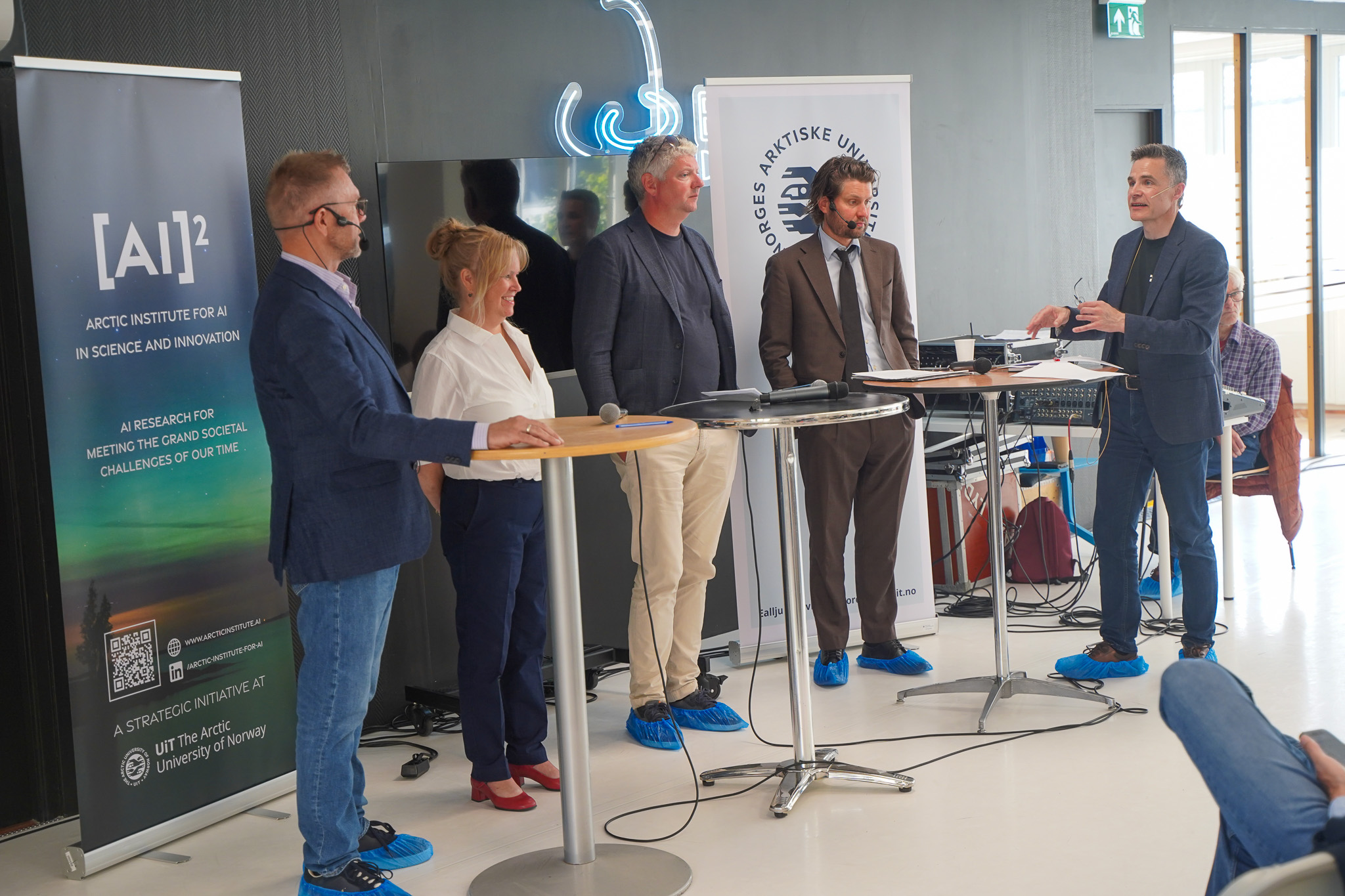
The event, titled "Kunstig intelligens i Arktis: Hvordan kan KI bidra til motstandsdyktige samfunn og økt sikkerhet?", took place at Bankgården in Arendal city centre.
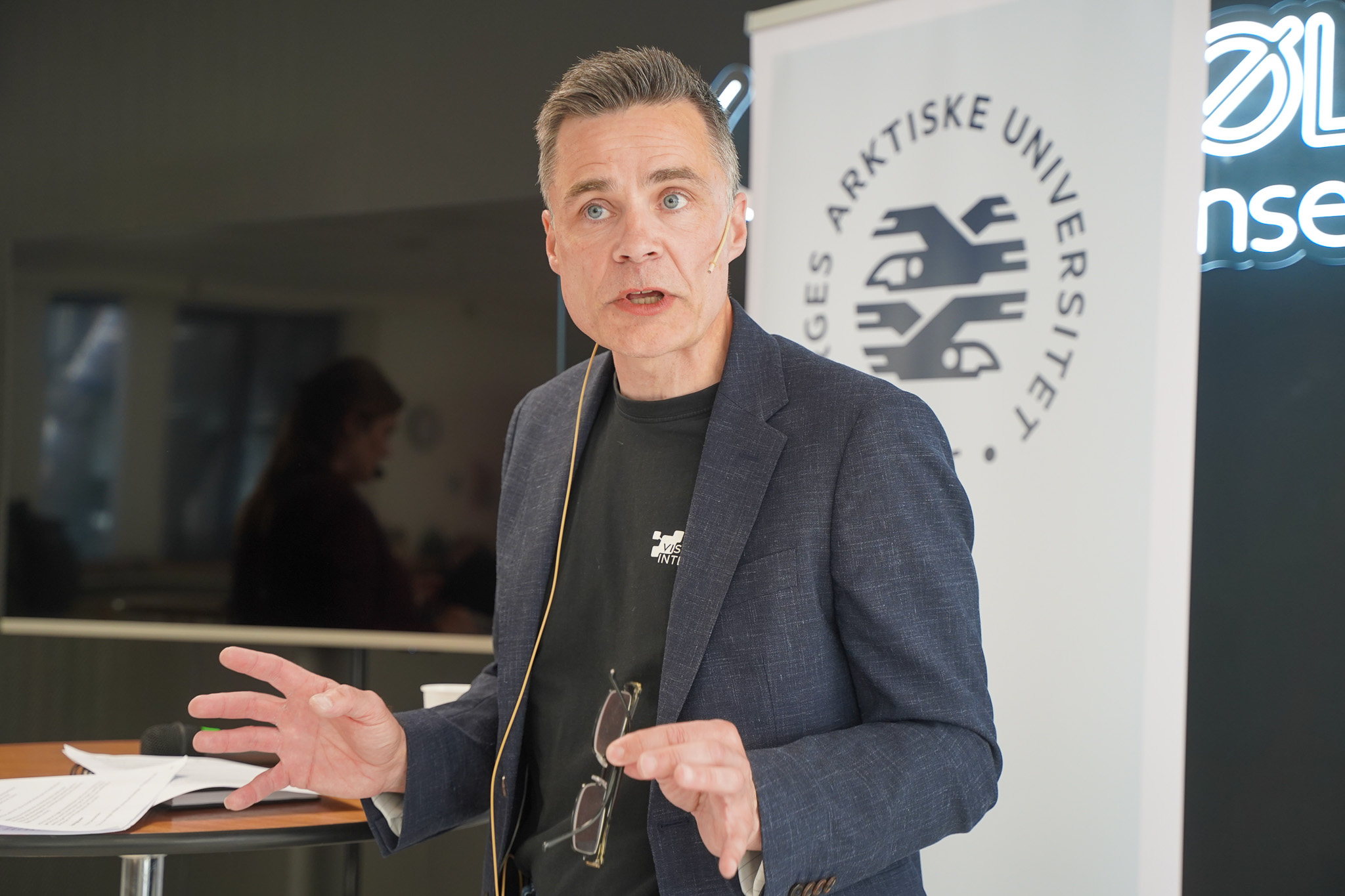
AI represents enormous opportunities in this area, Jenssen says. For instance, AI can be used to forecast atmospheric phenomena or monitor critical infrastructure.
During the event, he highlighted ongoing research at UiT's AI and machine learning environments.
"We use atmospheric data from several years back to develop AI models that can predict how the weather and sea ice will develop over the coming days or months," Jenssen explains.
Research groups at UiT are also developing AI that can detect ships and pollution in the ocean using satellite images. Jenssen believes this can contribute to improved situtational awareness.
Much of the AI research at UiT is done in collaboration with Northern Norwegian industries, including Kongsberg Satellite Services. Norwegian Minister of Industry and Commerce Cecilie Myrseth attended the event and emphasized the importance of establishing and maintaining close ties between academia, the public sector and industry for more effective AI solutions.
"Strong collaboration between academia and public and private actors is absolutely crucial if we are to succeed," says Myrseth.
International collaboration is particularly important for strengthening technological development. The ongoing collaboration between UiT and The Alan Turing Institute in the United Kingdom has, among other things, contributed to the development of new AI technology that can predict the extent of the Arctic sea ice.
"That is why international collaboration in this area is especially important," says the Minister.
Although AI brings many opportunities, the technology is not void of potential risk factors. Both Jenssen and Myrseth highlighted several challenges that need to be taken into account.
Data storage, energy, and ethically responsible technology were among the highlighted issues.
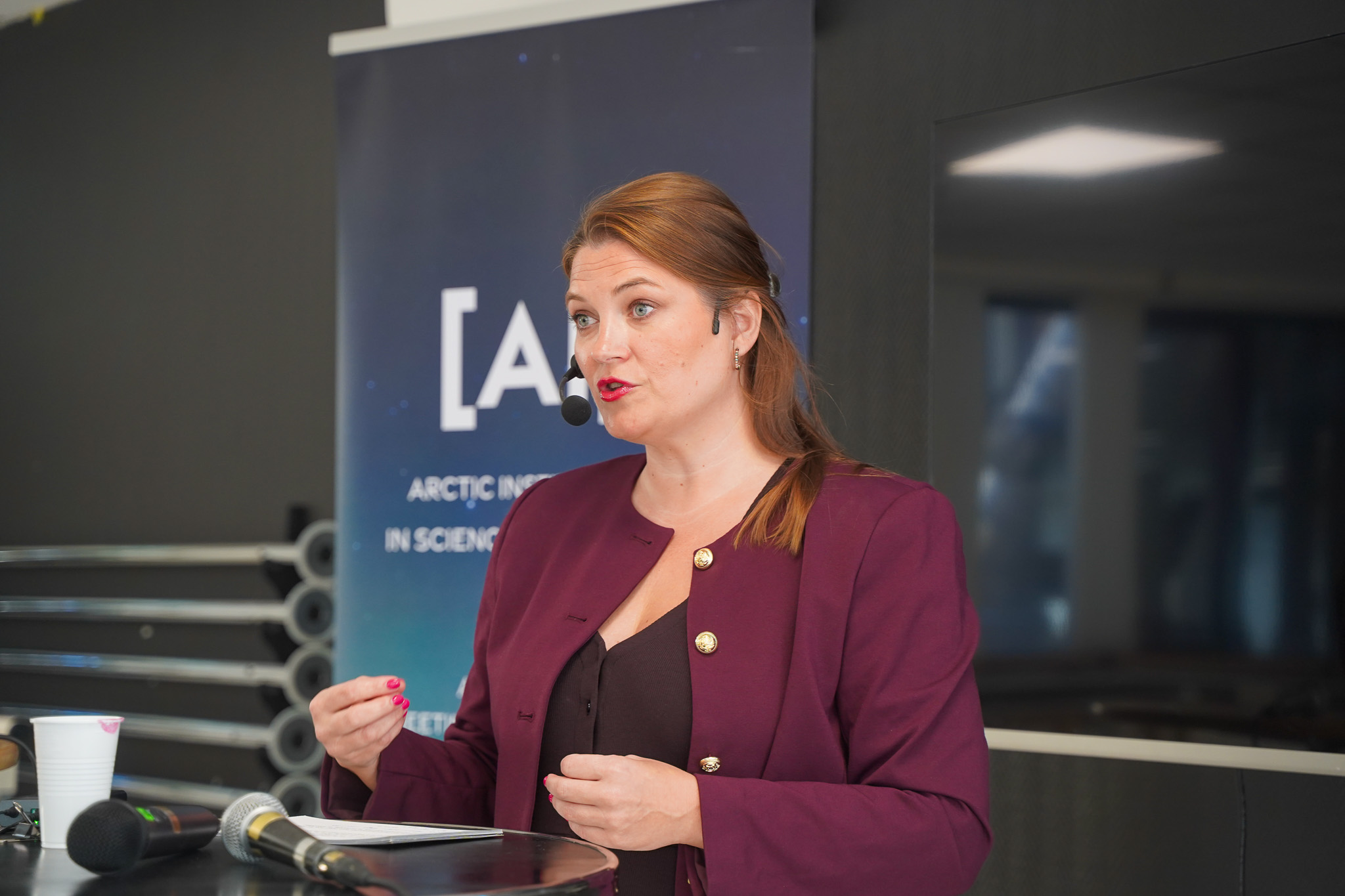
"We must set clear requirements to the technology in order to develop it in a safe and responsible manner," says Myrseth.
"Any technology that can make us stronger can also make us more vulnerable. A general challenges is that AI can make incorrect decisions. This is an important aspect of technological development that we must take into account. The best way to address this is to have as many people as possible in Northern Norway who can work with research, development, business development, and start-ups," says Jenssen.
"This can help lay the foundation for the new knowledge we need, such as for safer technological systems, verification, and regulation in the future," he adds.
Research and development of Arctic AI is an area where UiT is taking a leading role, Jenssen explains. Through the new Arctic Institute for Science and Innovation, UiT aims to invest heavily in this type of AI.
The Arctic Institute has a particular focus on developing and applying AI for better situational awareness and monitoring the Earth. The institute is one of two new AI centres at UiT, established in the wake of the collaborative agreeement between the university and Aker Nscale. The centre is led by Jenssen and researchers from UiT's Machine Learning group.
Jenssen presented the centre's ambitions at Arendalsuka.
"The centre will be a driving force for research and for educating researchers who will address real societal needs, both for Norway in general and particularly for the Arctic," says Jenssen.
Increased recruitment, skill development, and business development in the north are important goals for the centre.
"In the long term, we hope this will contribute to increased recruitment and population growth in Northern Norway," he adds.
Vegard Wennesland, State Secretary at the Norwegian Ministry of Trade, Industry and Fisheries" participated in the event with Jenssen. He applauds the AI environments in Northern Norway, both at UiT and in the industrial sector.
"These research environments possess an enormous world-leading expertise. No one can do this better than the environments we have in the north," says Wennesland.
He says the government has a responsibility to support and strengthen future AI research in the Arctic and the High North.
"We are committed to support AI development that also benefits the Arctic," Wennesland says.
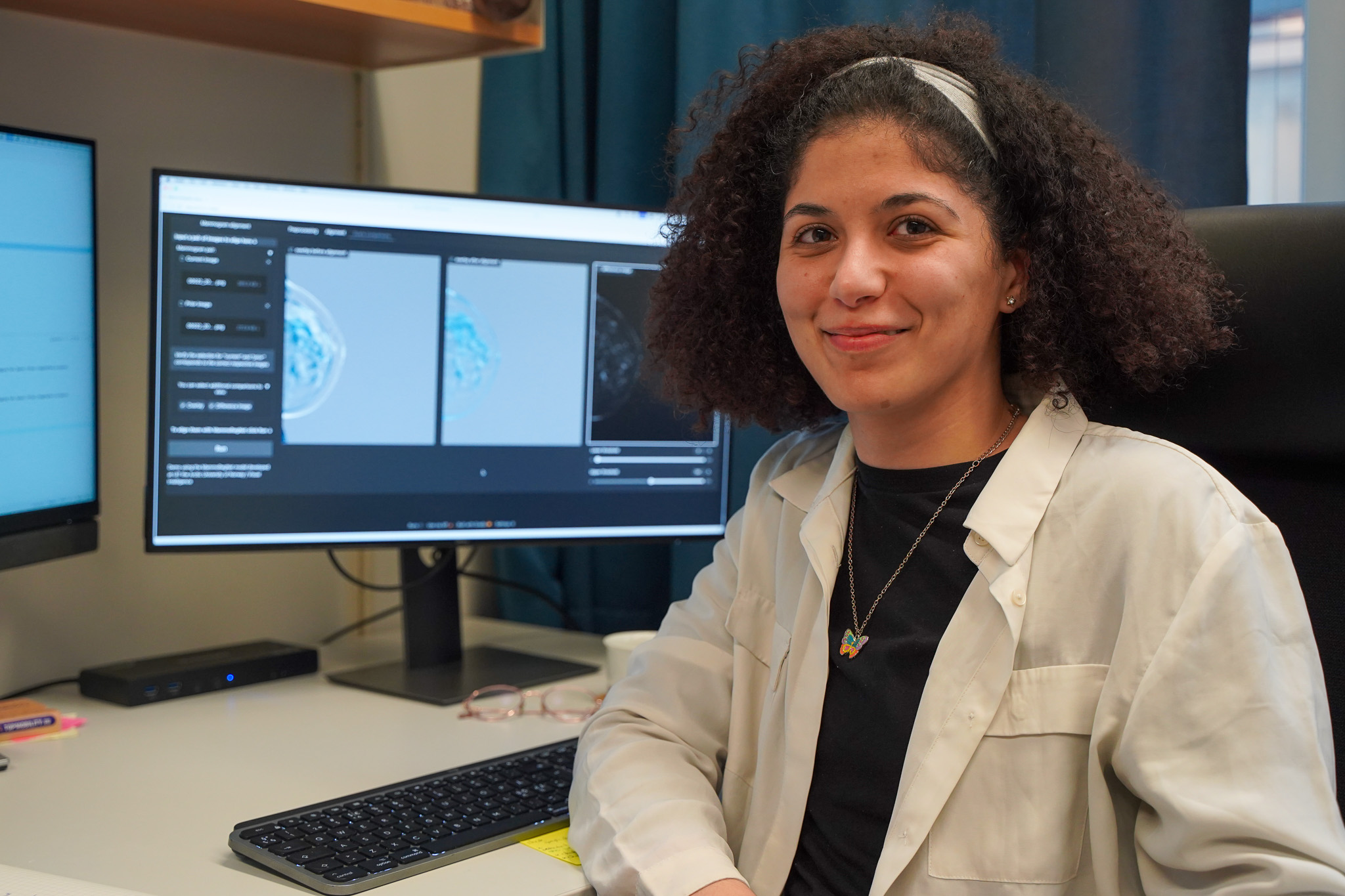
Cheyma Azzouz, a Master Student at UiT's Physics program, developed a graphical user interface for aligning mammography images as part of an [AI]² internship. This can help doctors identify and track subtle tissue changes linked to breast cancer risk.
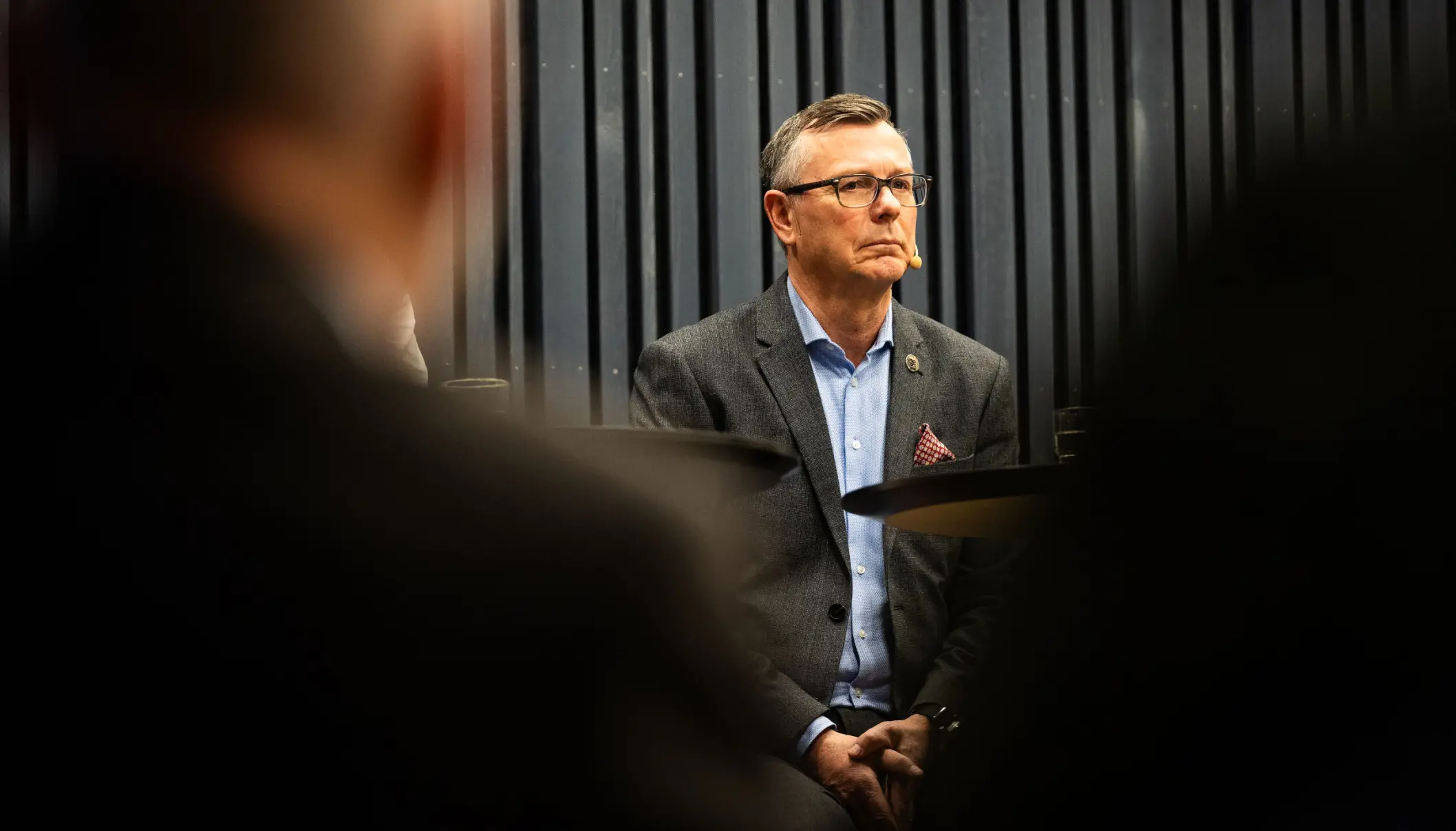
Norge må ta lederskap i ansvarlig KI-utvikling — ikke ved å stå på bremsen, men ved å bygge kompetansen som gjør oss i stand til å styre (Norwegian opinion piece in Khrono.no).
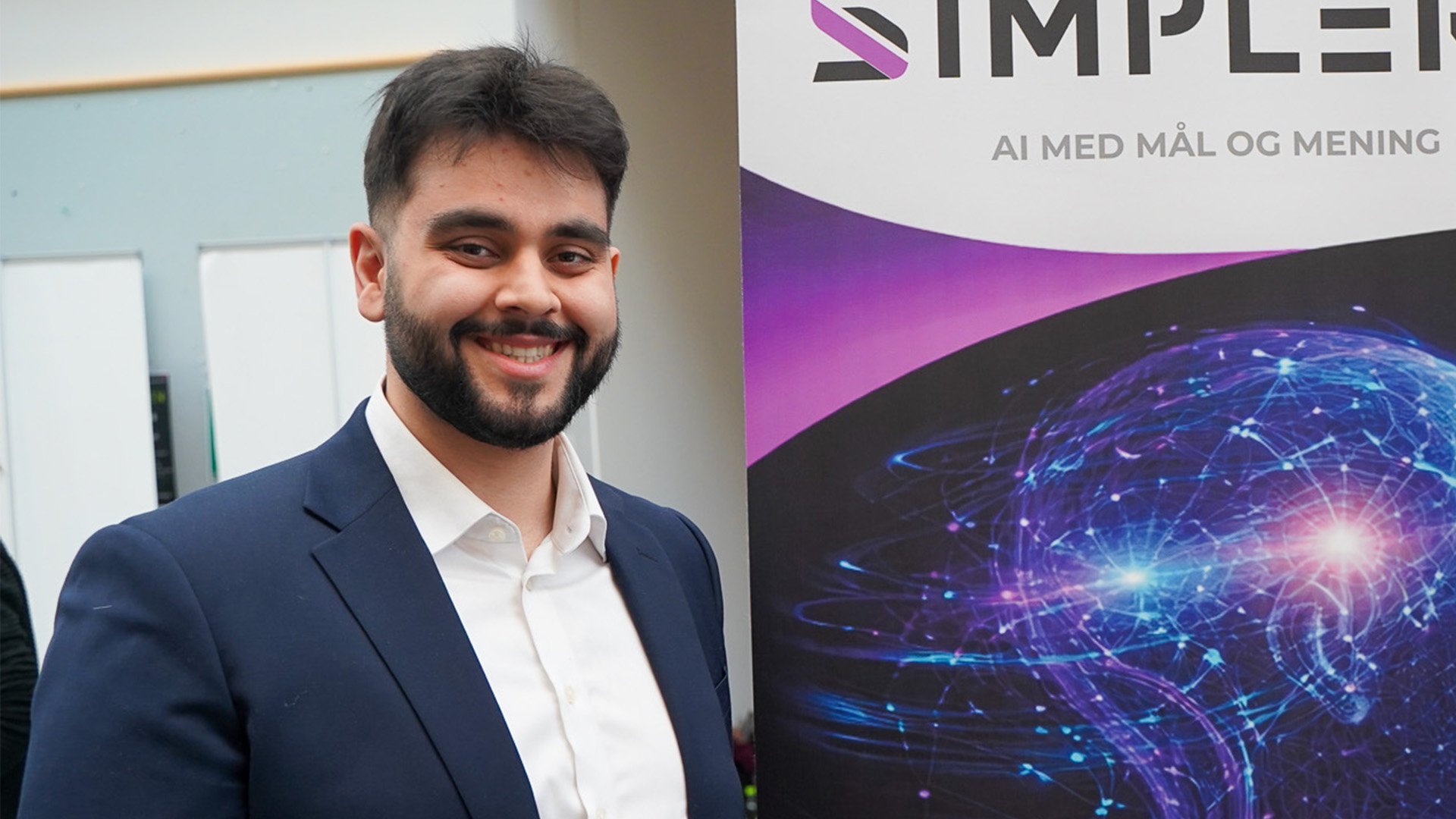
Kian Sartipzadeh, a Master Student at UiT's AI study program, talks about his experiences as a summer intern at the Arctic Institute for AI. Together with UiT's finance department, he developed an AI system to assist the finance staff with correcting invalid invoices.
.png)
Congratulations to Centre Director Robert Jenssen, who was appointed as a new fellow at the International Associaton for Pattern Recognition (IAPR).
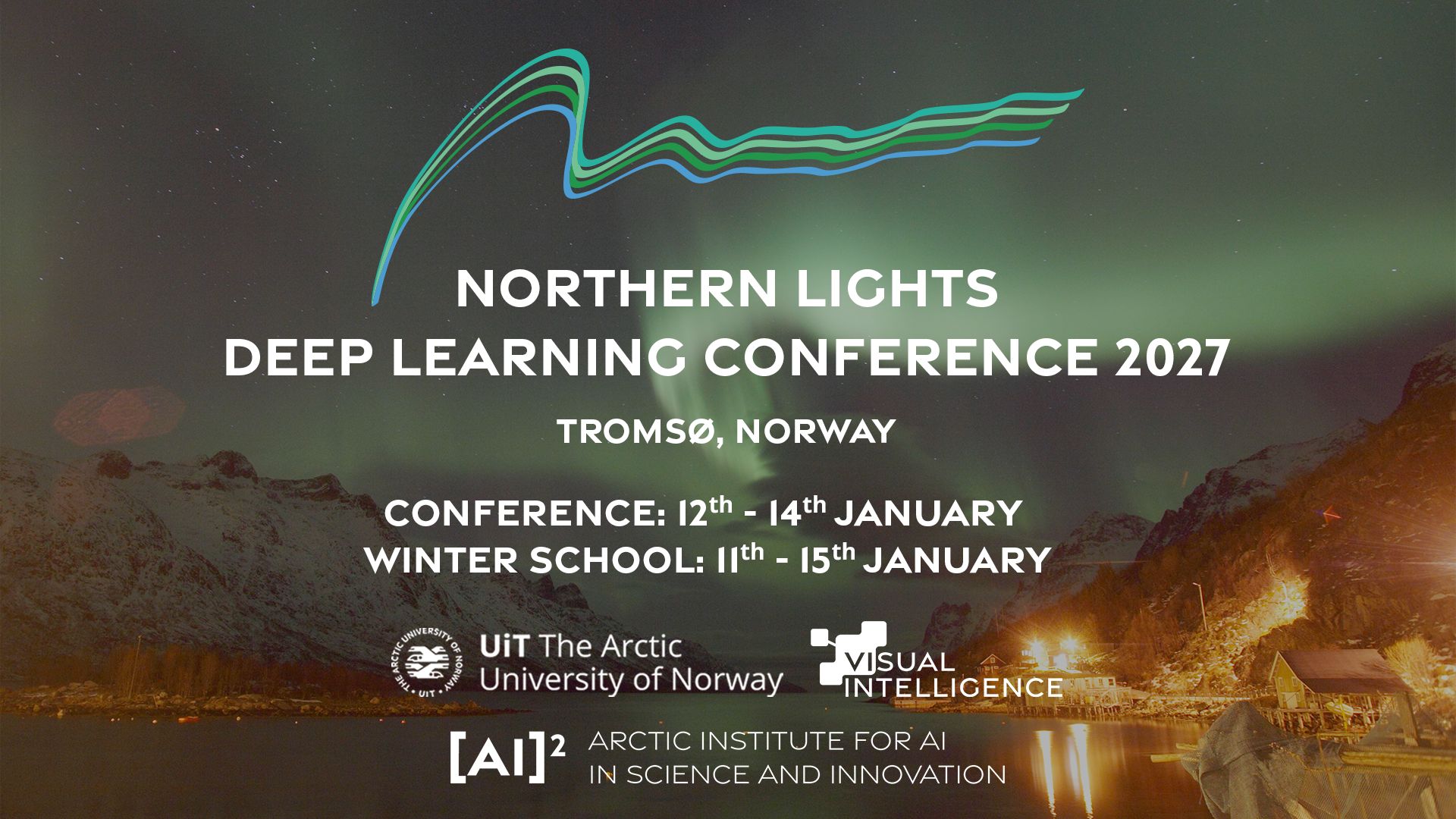
Arctic Institute for AI in Science Innovation is proud to be a co-organizer of the Northern Lights Deep Learning Conference 2027.
.jpg)
Områdene over polarsirkelen står overfor omfattende endringer og press. Hvordan kan kunstig intelligens bidra til mer motstandsdyktige samfunn i nord? Dette ble diskutert under Arendalsuka der tema var KI sin rolle og betydning for Arktis og nordområdene (News article at uit.no)
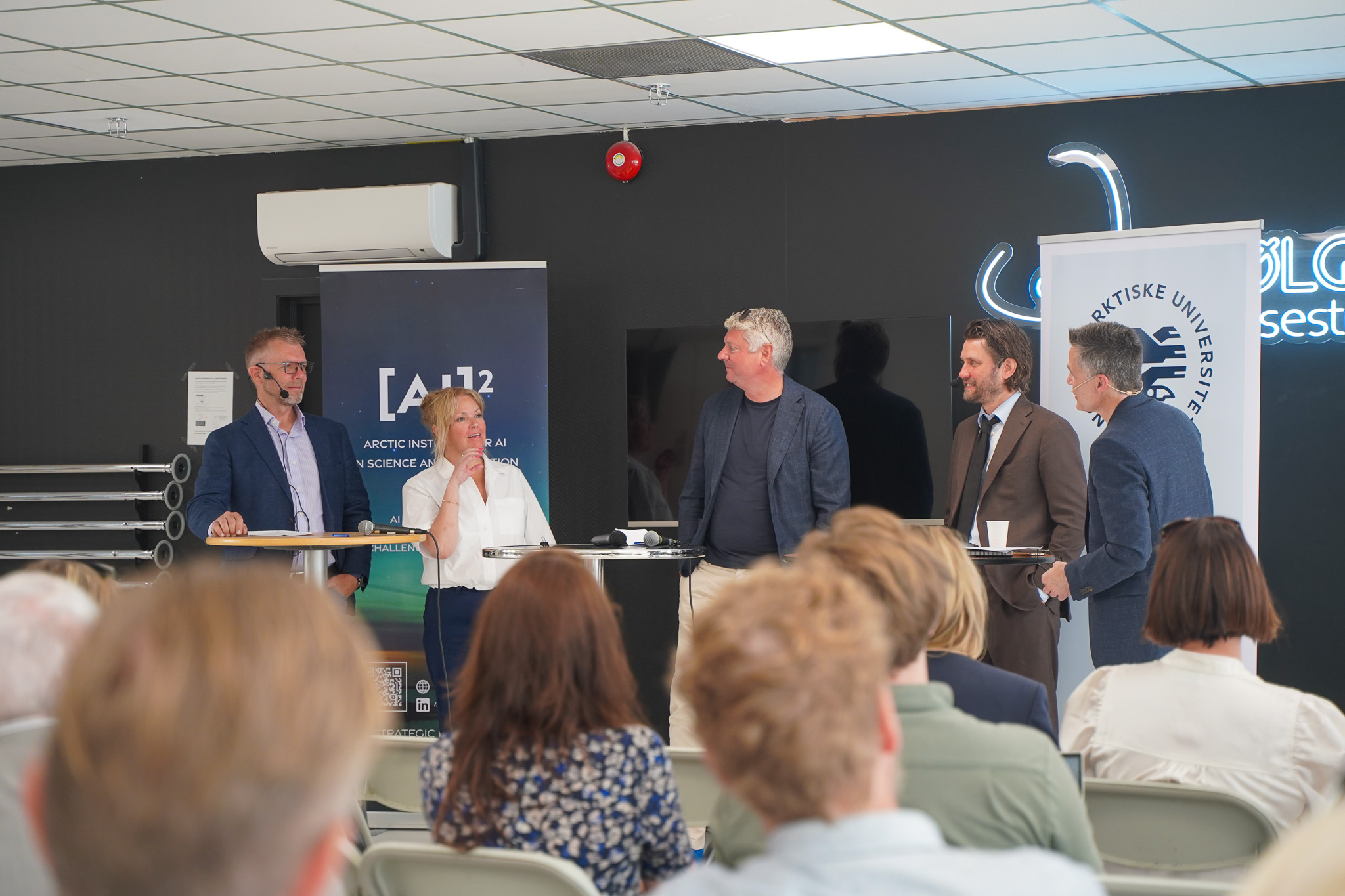
The Arctic Institute for AI gathered representatives from industry and Norwegian politics to discuss how AI can be used to handle pressure and changes in the Arctic region